



Hardware components | ||||||
 |
| × | 1 | |||
 |
| × | 15 | |||
 |
| × | 1 | |||
Software apps and online services | ||||||
 |
| |||||
 |
| |||||
LumiBand is a music-reactive LED wristband built for festivals, clubs, and live events. What started in 2020 as an ATtiny85 with 15 NeoPixels and a bare electret mic has evolved into a proper wireless lighting fixture you wear on your wrist.
The concept Festival lighting designers already control every moving head, LED bar, and strobe in the venue over DMX. LumiBand puts the wristbands on the same network, the lighting desk operator controls the crowd the same way they control the stage. Every wristband is a DMX fixture. The crowd becomes part of the light show.
Why nRF52832 and not ESP32 The original Gen3 prototype used an ESP32 for native WiFi and Art-Net/sACN reception. It worked, but WiFi consumes roughly 10x the power of BLE on a single cell LiPo. For a wristband that needs 6 hours of festival runtime that trade-off is unacceptable.
The solution: move the WiFi off the wristband entirely. The nRF52832 handles everything over BLE, leaner, more power efficient, and excellent RF performance in dense crowd environments where hundreds of devices compete for airspace. A small WiFi-BLE bridge node sits outside the wristband, receiving Art-Net or sACN from the lighting console over WiFi and rebroadcasting to the wristbands over BLE. The wristband stays power efficient. The bridge handles the heavy lifting.
BLE for setup Assigning a DMX universe and start address to each wristband takes about 10 seconds from a phone via BLE, no laptop, no physical connector, no pulling units off wrists. Once configured the address is persistent.
Autonomous fallback The bare electret mic ADC input from Gen2 is still present. If there's no DMX network available the wristband drops back to autonomous beat detection mode. No amplifier circuit - festivals are loud enough that the venue provides the gain. Thresholds tuned for 90dB+ environments.
VEML6040 ambient light sensor Gen3 adds a VEML6040 RGBW color sensor for an application in live events I'm not ready to share publicly yet. If you've thought about what a wristband could do knowing what color light is hitting it from the stage rig, you're probably on the right track.
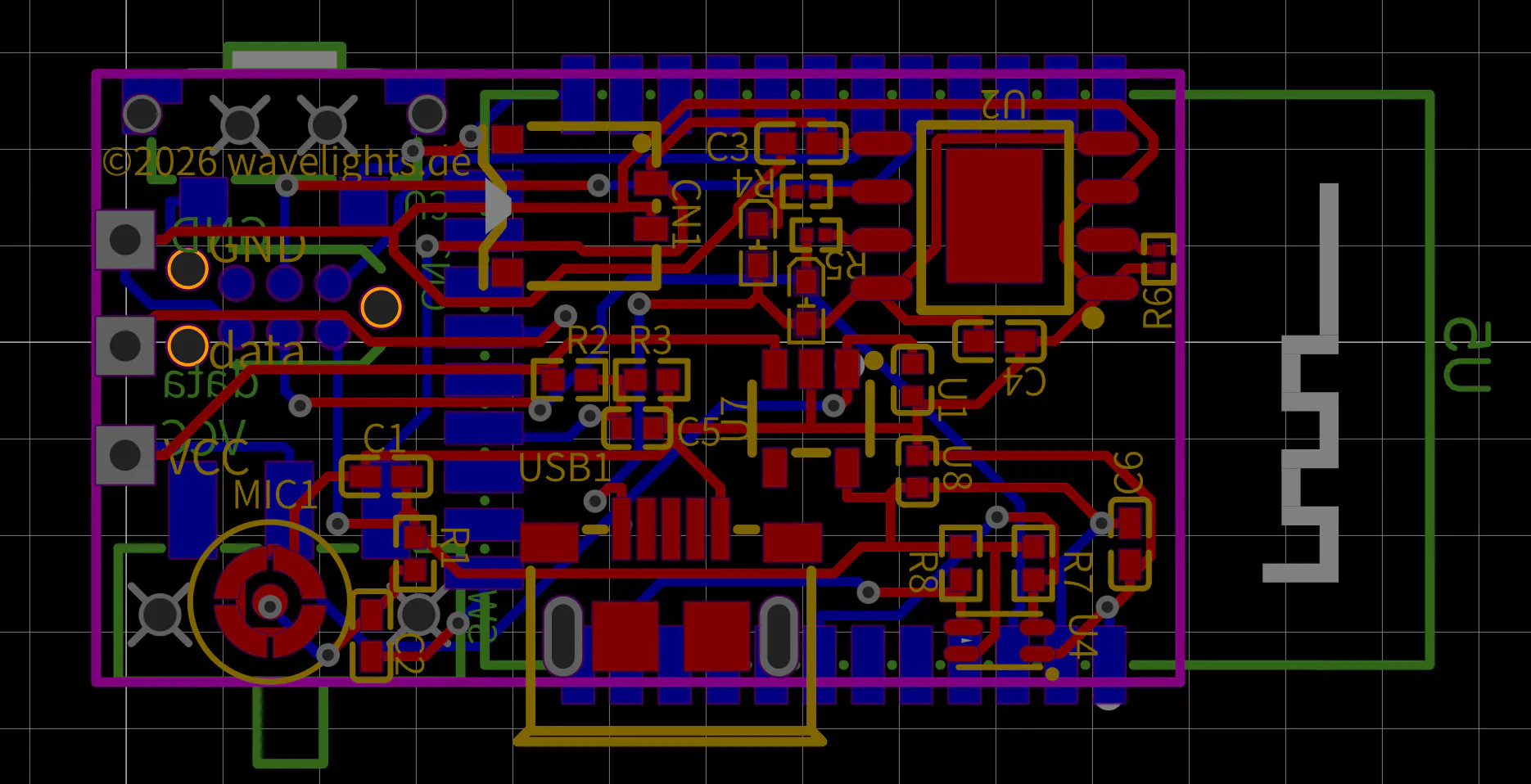
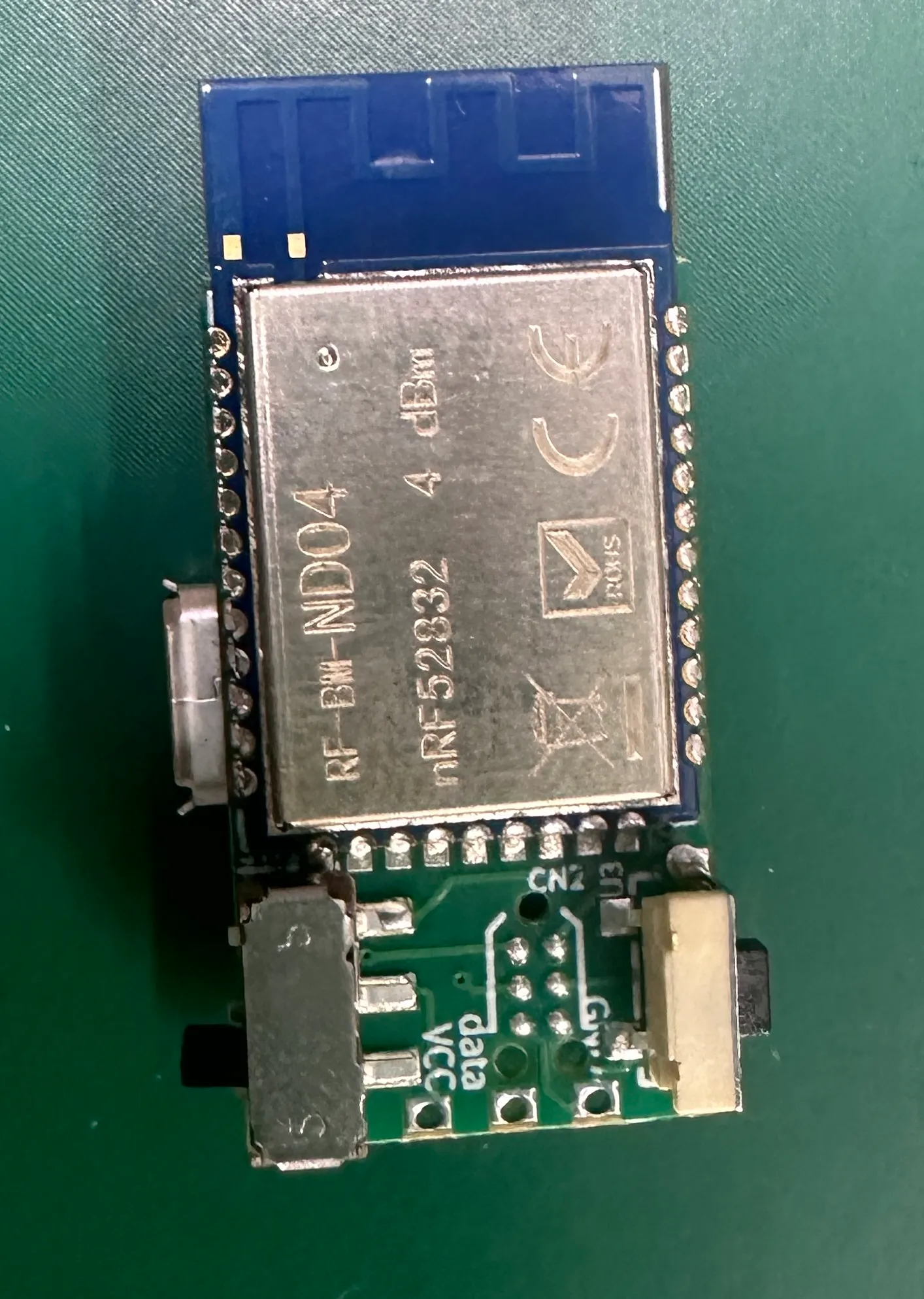
Hardware summary- MCU: nRF52832
- LEDs: 15x WS2812B NeoPixels
- Power: single cell LiPo, AP2112K-3.3 LDO, TP4056 charge controller
- Connectivity: BLE for control and setup
- Sensor: VEML6040 RGBW ambient light
- Programming: SWD via Tag-Connect TC2030
- Housing: injection moulded silicone (tooling via Kickstarter campaign)
- Runtime: 6 hours
Status 100 Gen2 units already deployed at festivals in Malta. Gen3 PCBs currently in production. A Kickstarter campaign is running now to fund the silicone injection mould tooling — follow the project if you want to be notified when it goes live.
Full schematic and firmware architecture details in the project logs.


_3u05Tpwasz.png?auto=compress%2Cformat&w=40&h=40&fit=fillmax&bg=fff&dpr=2)


Comments