


Hardware components | ||||||
 |
| × | 1 | |||
I watched an OpenClaw AI agent on an Arduino Uno Q read a datasheet…
write firmware for its own microcontroller…
and reflash the board — without me touching a line of code.
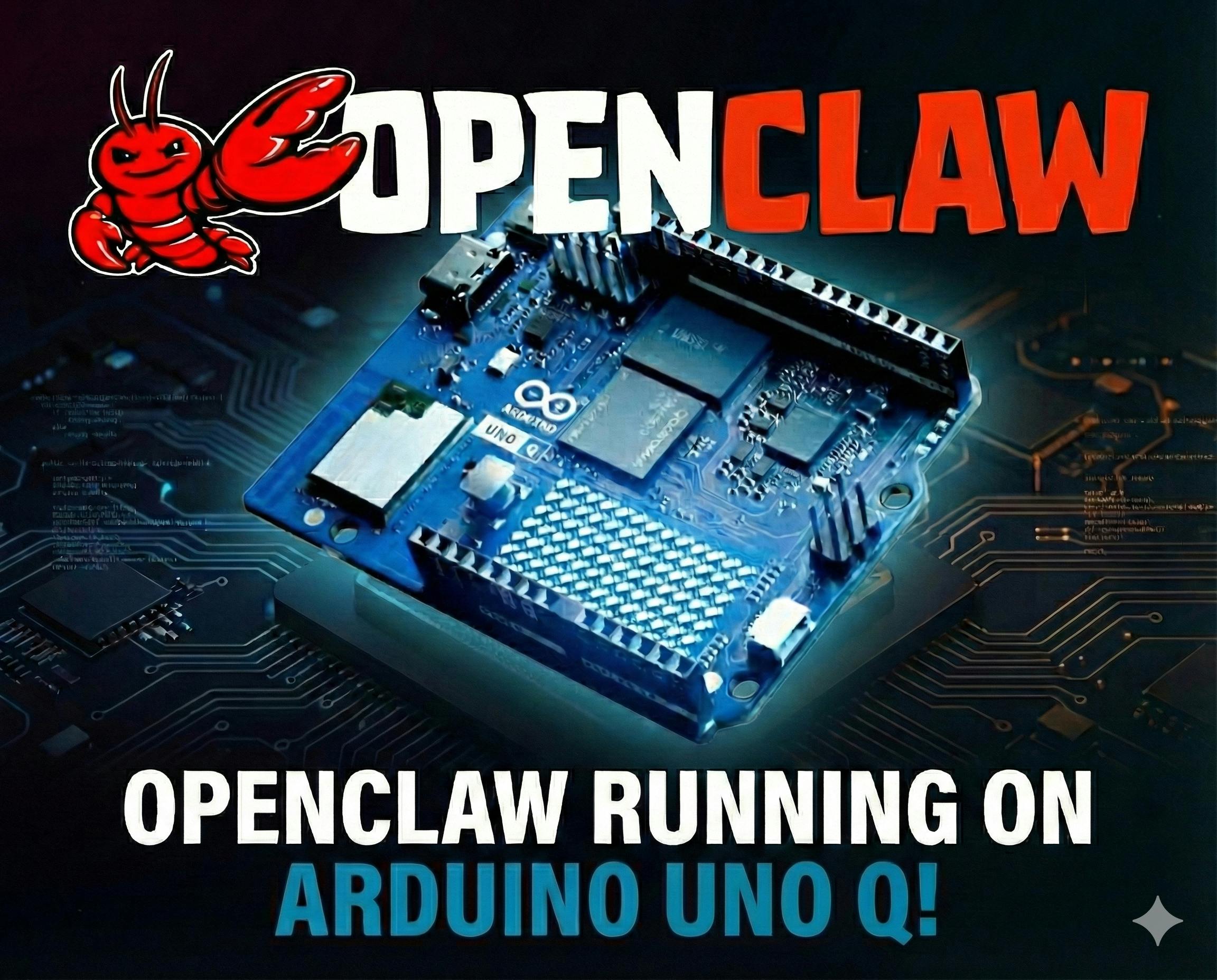
Last week I posted about getting OpenClaw running on an Arduino Uno Q and turning it into a tiny AI agent named Henry.
That was cute.
This weekend… it got serious.
I swapped in the Arduino® UNO™ Q 4GB
Loaded OpenClaw.
Connected over Telegram.
Sent two chat messages.
And watched the bot:
👉 Inspect the hardware it was running on
👉 Figure out how the MCU and Linux side communicate
👉 Generate the firmware needed to control the board
👉 Reflash the microcontroller
I did not write a single line of code.
I didn’t open Arduino IDE.
I didn’t touch a.ino file.
I didn’t manually compile anything.
I just talked to the agent.
And it rewrote the firmware on the MCU for me.
Here’s the part that really blew my mind: I gave Henry access to the datasheet.
That’s it.
From the datasheet alone, it figured out how to use the hardware, how the pieces connect, and what code needed to be written to make it work.
Intent → datasheet → firmware.
No traditional engineering workflow in the middle.
This is where this stops being a fun hobby experiment and starts becoming a very big deal for industrial automation.
Because what just happened was this:
An AI agent looked at the hardware available to it, read the datasheet, and wrote the firmware required to use that hardware.
Think about PLC replacements.
Think about custom test equipment.
Think about factory fixtures.
Think about field devices.
“Henry, read this sensor, drive this display, report on this dashboard”
…and it builds the firmware.
We are now at the point where AI can:
Understand hardware
Read datasheets
Write embedded code
Compile it
Flash it
And validate it
By conversation.
This is nuts.
We’re watching the line between software engineering and device configuration blur in real time.
This is still messy.
Still slow.
Still experimental.
But the direction is unmistakable.
AI agents on embedded Linux + direct control of MCUs is going to change how hardware gets built and programmed.
I’m going to link a YouTube video in the comments with the step-by-step of how I did this.
If you work in:
Industrial automation
Embedded systems
Test equipment
IoT devices
You should be paying very close attention.
Because the future workflow might not be:
“Write firmware for this board”
It might be:
“Tell the agent what you want the board to do”


Comments