Many small electric motors are still maintained using fixed schedules or only after a noticeable problem occurs. Both approaches can be inefficient: scheduled maintenance may replace parts that are still healthy, while unexpected failures can cause downtime, wasted resources, and additional repair costs.
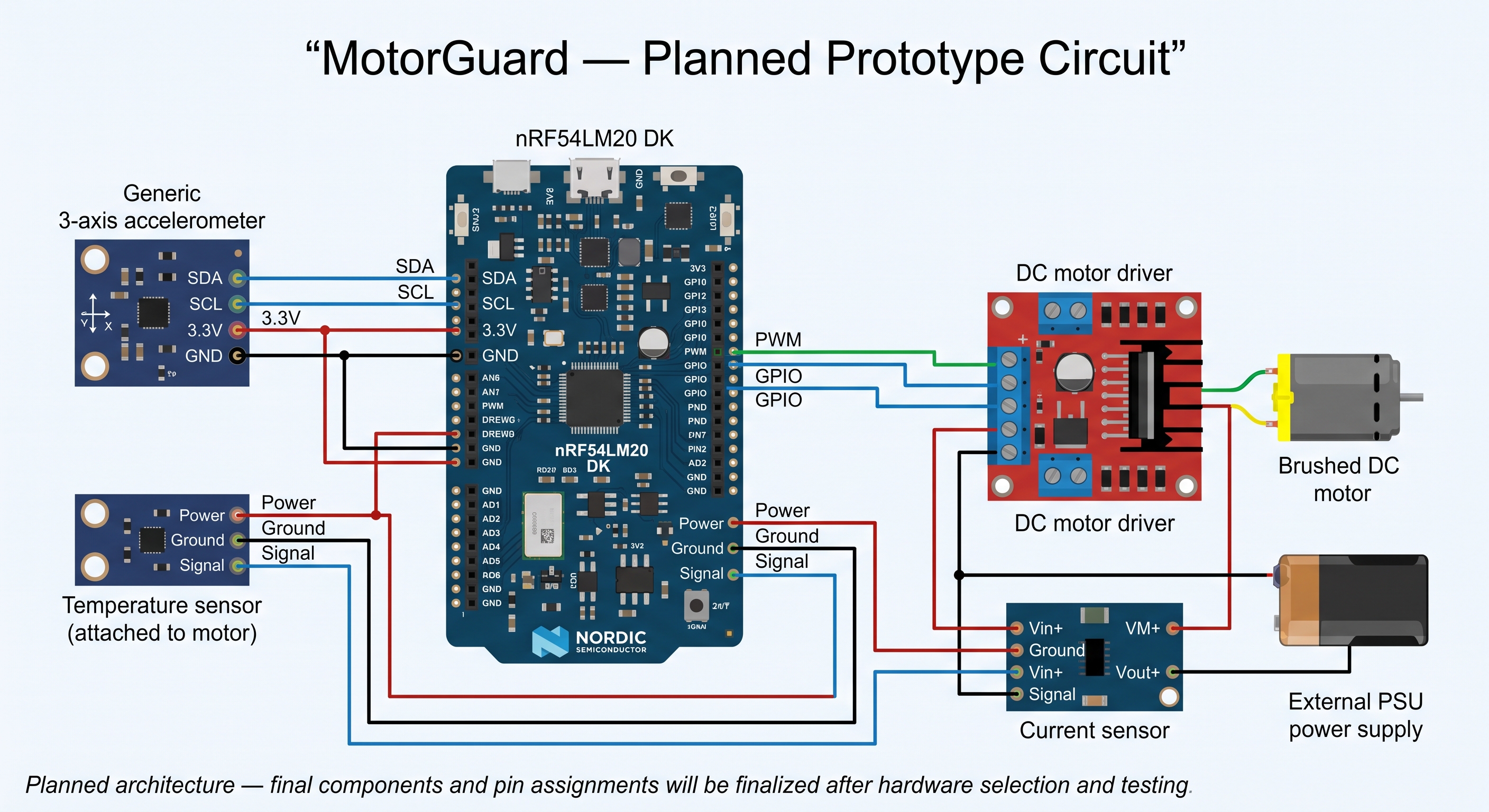
MotorGuard addresses this problem by continuously monitoring the motor’s physical behavior rather than relying only on maintenance intervals. Vibration and temperature data are collected and analyzed locally by the nRF54LM20 using an edge-AI anomaly detection model. The system learns what normal operation looks like and identifies changes that may indicate developing mechanical problems.
Unlike a simple monitoring system that only displays sensor values or triggers an alarm when a fixed threshold is exceeded, MotorGuard focuses on detecting changes in the motor’s behavior. This makes it possible to identify early degradation even when individual sensor values have not yet reached a critical threshold.
The solution is useful because it can provide an early warning before a failure occurs, allowing maintenance to be performed when it is actually needed. This can help extend equipment lifetime, reduce unnecessary component replacement, minimize downtime, and reduce material and energy waste.
This directly addresses predictive maintenance by continuously collecting real-world sensor data, analyzing it at the edge, detecting abnormal patterns, and communicating an actionable maintenance warning over Bluetooth Low Energy.




Comments