


Hardware components | ||||||
 |
| × | 1 | |||
Software apps and online services | ||||||
 |
| |||||
Hand tools and fabrication machines | ||||||
 |
| |||||
We live in an era where identity is under attack. In the physical world, plastic ID cards can be forged. In the digital world (Web3), if someone steals your private key, they become you. They can drain your funds or impersonate your citizenship, and there is nothing you can do about it.
Passwords can be guessed. Private keys can be stolen. But there is one thing that cannot be stolen: Your face.This project is a Bio-Secured Decentralized Identity System.
We built a bridge between government-grade verification and blockchain security. It isn’t just a digital wallet; it is a smart identity vault that knows who you are.
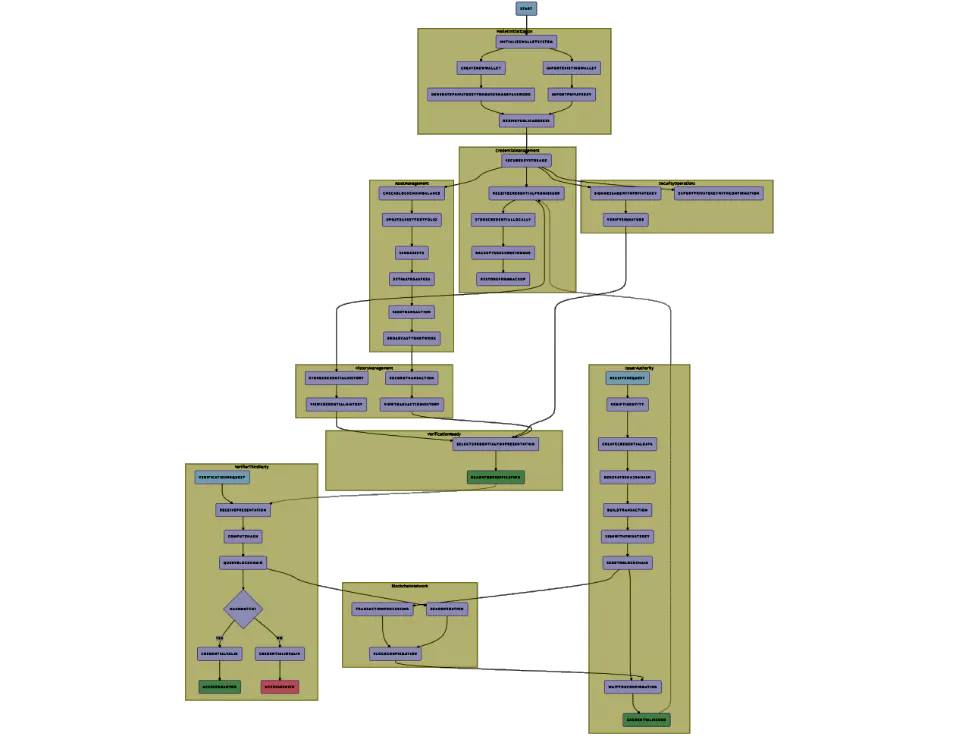
The Authority: We utilize a smart contract acting as a trusted issuer (like NADRA) to place an immutable hash of a citizen's details (CNIC, Name, DOB) on the Ethereum blockchain.
- The Authority: We utilize a smart contract acting as a trusted issuer (like NADRA) to place an immutable hash of a citizen's details (CNIC, Name, DOB) on the Ethereum blockchain.
- The Guardian: To access this identity, we built a Python-based wallet that doesn't just ask for a password—it asks for Liveness. The user must perform real-time actions (blinking, turning their head) to prove they are a real human and not a photo or a deepfake.
It’s a system where your Ethereum address acts as your digital CNIC, but your biometric signature is the key.
1. Solving the "Private Key Anxiety" We noticed a massive barrier to Web3 adoption: fear. People are terrified that one malware link or a lost piece of paper means losing their digital life. We wanted to build a system where you are the key. By integrating face_recognition with web3.py, we ensured that even if a hacker has your laptop and your password, they still can't sign a transaction without your physical presence.
2. Combating the AI Threat With the rise of Generative AI, static facial recognition is no longer enough. A hacker can just hold up a picture of you to a camera. We decided to implement Active Liveness Detection (detecting blinks and head rotation) to ensure that our system is resistant to spoofing attacks. We wanted to prove that security doesn't have to be complicated—it just has to be smart.
3. Modernizing National Infrastructure We looked at institutions like NADRA and saw an opportunity. Paper records are slow, and centralized databases are honeypots for hackers. By moving the verification layer to the blockchain (without exposing the actual personal data), we wanted to demonstrate how a country can issue unforgeable, globally verifiable digital identities.


Comments