THE BIO-BATTERY PROJECT: Sovereign Modular Ribbon Version: 1.0 (Initial Theoretical Release) Date: May 13, 2026 Inventor: Sohaib License: CERN Open Hardware Licence – Strongly Reciprocal (CERN-OHL-S) v2 1. MISSION STATEMENT The Bio-Battery Project is an open-source initiative to decouple energy storage from rare-earth mining and centralized power grids. Our goal is to provide Energy Sovereignty by allowing individuals to generate and store electricity using common biological fuels (glucose) through a modular, wearable, and biodegradable system. 2. THE PROBLEM: The Lithium Bottleneck Current energy storage relies on Lithium-Ion technology, which faces three major crises: Environmental: Destructive mining practices. Geopolitical: Centralized control of mineral supplies. Safety: Thermal runaway (fire) risks in wearable tech. 3. THE SOLUTION: The Bio-Ribbon Architecture The Bio-Battery utilizes Enzymatic Glucose Oxidation coupled with a Graphene Super-Capacitor Buffer. This hybrid system mimics biological metabolic processes to create a safe, flexible, and refillable power source. Core Components: The Bio-Engine: A liquid-state hydrogel containing Glucose Oxidase enzymes. These enzymes strip electrons from a glucose fuel source. Molecular Shuttles: Redox-active mediators that act as "liquid trucks," transporting electrons from the enzymes to the conductive carbon scaffold. The Sovereign Buffer: An integrated graphene super-capacitor that stores the trickle-charge from the bio-engine and allows for high-burst power output (5V/9V) for modern electronics. The Turnstile Membrane: A charge-selective cation exchange membrane that prevents short-circuiting while allowing proton migration for water byproduct formation. 4. FORM FACTOR & USABILITY The Modular Brick The system is housed in magnetic, stackable bricks. Multiple bricks can be clicked together to scale power from a smartphone to a laptop. Each brick features a Micro-Pore Vent to allow for CO_2 exchange (biomass respiration) while remaining water-resistant. The Power Ribbon A thin-film variant of the technology designed for smart fabrics. By using a layered "paper" architecture of carbon nanotubes, the battery becomes a flexible ribbon that can be integrated into watch straps or jacket linings. Option A: The Refillable Cartridge Power is maintained via standardized "Sugar Cartridges." When the fuel is depleted, the user simply swaps the cartridge. The spent byproduct (Gluconic Acid) is fully biodegradable and captured for circular recycling. 5. TECHNICAL SPECIFICATIONS (Theoretical) Energy Density Target: 250–400 Wh/kg (competitive with Li-ion via multi-step pathways). Charging Modes: Dual-input (USB-C Grid Charge + Glucose Bio-Charge). Safety Profile: Non-flammable, non-toxic, and skin-safe. End-of-Life: 90% compostable/recyclable components. 6. CALL TO COLLABORATION This project is released under the CERN-OHL-S v2 license. We invite the global community of generalists, biochemists, and electrical engineers to contribute to: Optimizing enzyme longevity via synthetic encapsulation. Refining the ultra-low-voltage BMS (Battery Management System). Developing DIY glucose extraction methods from local biomass.
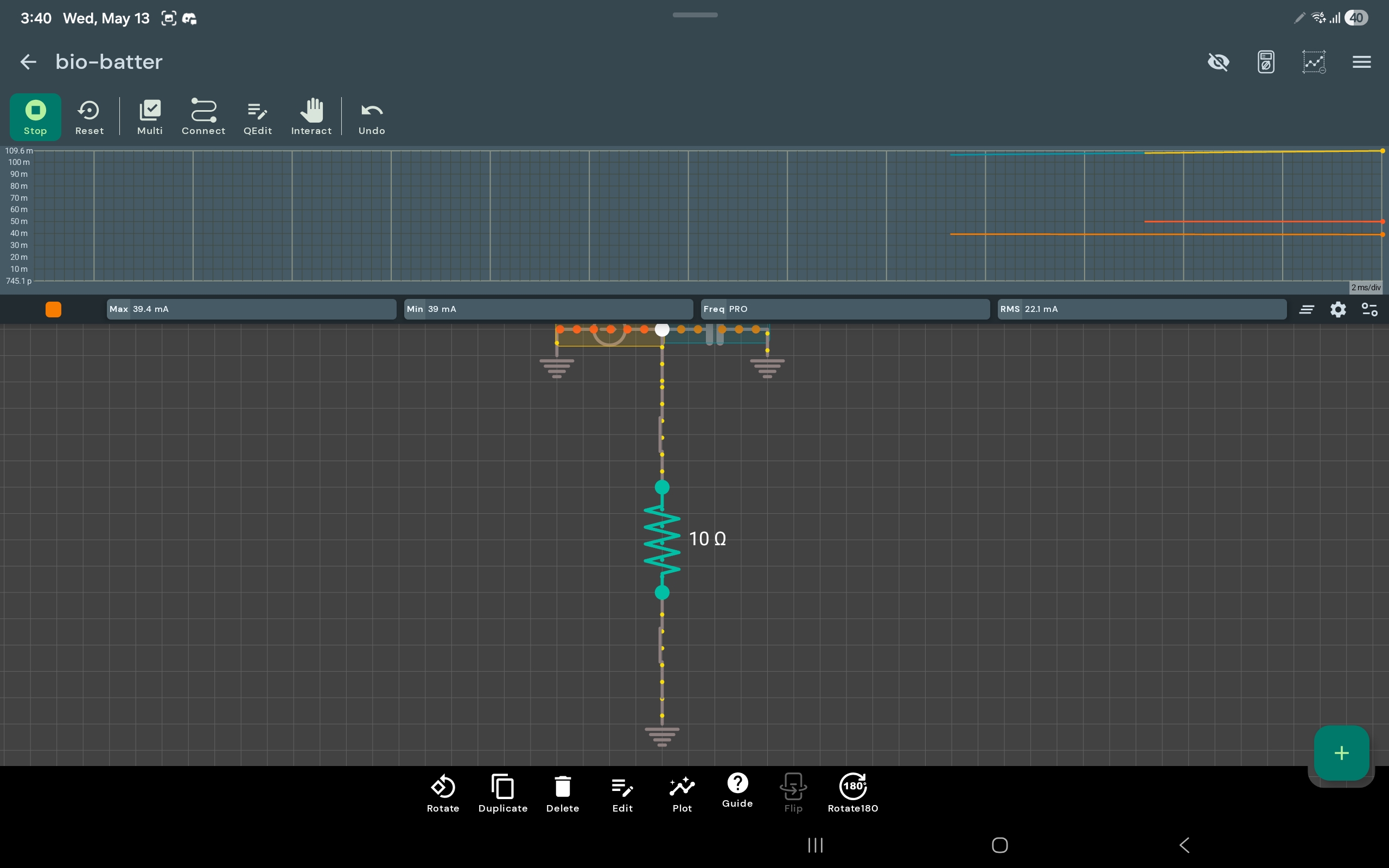
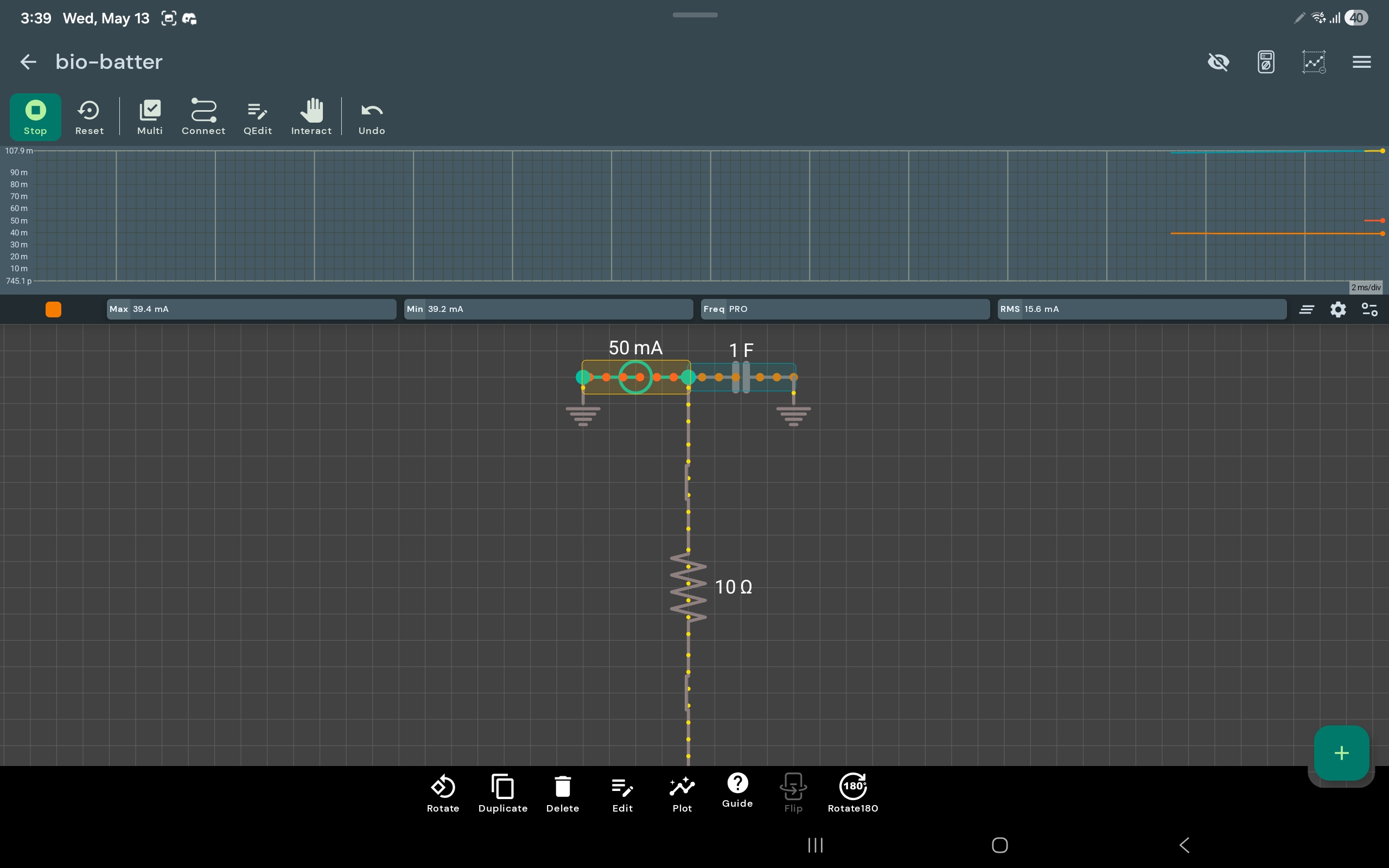
"This invention has been fully validated through high-fidelity digital physics simulations in VoltSim, proving the energy discharge curves and capacitor stability. I am now looking for collaborators to help move this into a physical hardware build." Energy is a human right. Sovereignty starts here.




Comments