


Hardware components | ||||||
| × | 1 | ||||
| × | 1 | ||||
Software apps and online services | ||||||
 |
| |||||
| ||||||
We originally developed FGRFMesh out of absolute necessity for our own industrial automation and robotics layouts—specifically Autonomous Mobile Robots (AMRs) and Automated Guided Vehicles (AGVs) operating in warehouse environments.
In modern industrial facilities, the 2.4 GHz and 5 GHz Wi-Fi bands are severely overcrowded. They are constantly saturated by corporate access points, mobile handheld terminals, streaming IP cameras, and barcode scanners. For critical machine operations, this congestion leads to high latency, dropped packets, and unpredictable communication drops—making Wi-Fi a terrible choice for real-time telemetry, routing diagnostics, and machine coordination.
The Solution: Local Sub-GHz MeshFGRFMesh introduces a clean alternative: a local, open-source sub-GHz mesh network that dynamically carries UART/API packets directly between devices.
Because it operates as a true mesh network (utilizing a modified Ad hoc On-Demand Distance Vector / AODV routing protocol), nodes automatically handle packet forwarding. Your hardware doesn’t need a direct line-of-sight connection to a central master gateway; the network dynamically route-discovers the best path through neighboring nodes.
Additionally, FGRFMesh serves as a drop-in supply chain alternative to proprietary setups like the Digi XBee SX 868. Instead of suffering through component shortages and long commercial lead times, developers get an open, highly hackable platform built on standard microcontrollers.
The Hardware ArchitectureThe platform features two distinct hardware footprints depending on your implementation stage:
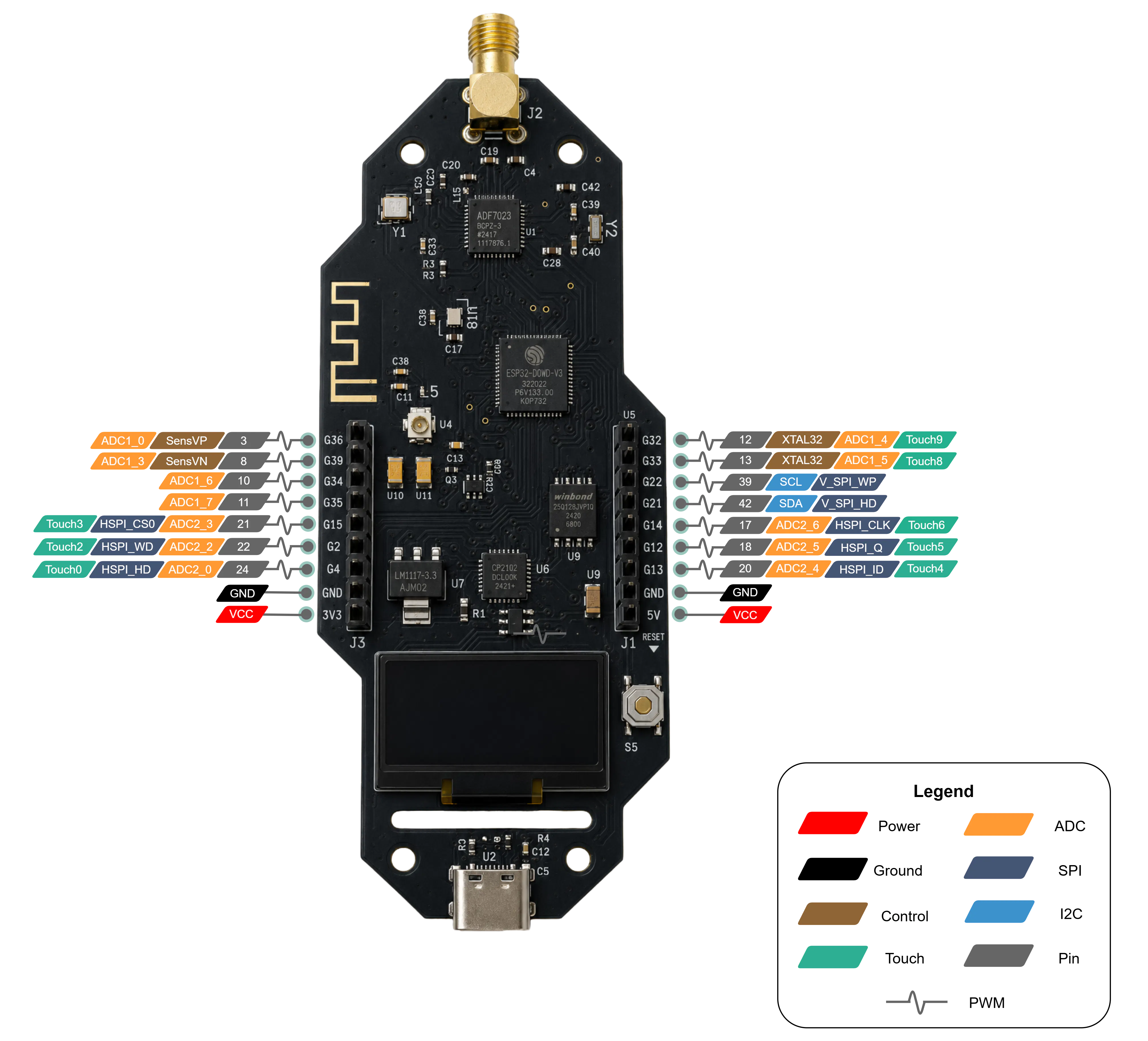
1. FGRFMesh ESP32 OLED Development ModuleProcessor: ESP32-based standalone module.
Purpose: Built explicitly for lab evaluation, field diagnostic testing, and prototyping.
Features: Features an integrated 868 MHz radio, on-board Wi-Fi via the ESP32, USB-C for serial debugging/power, and a dedicated OLED display to monitor live network status and link RSSI without needing an external computer.
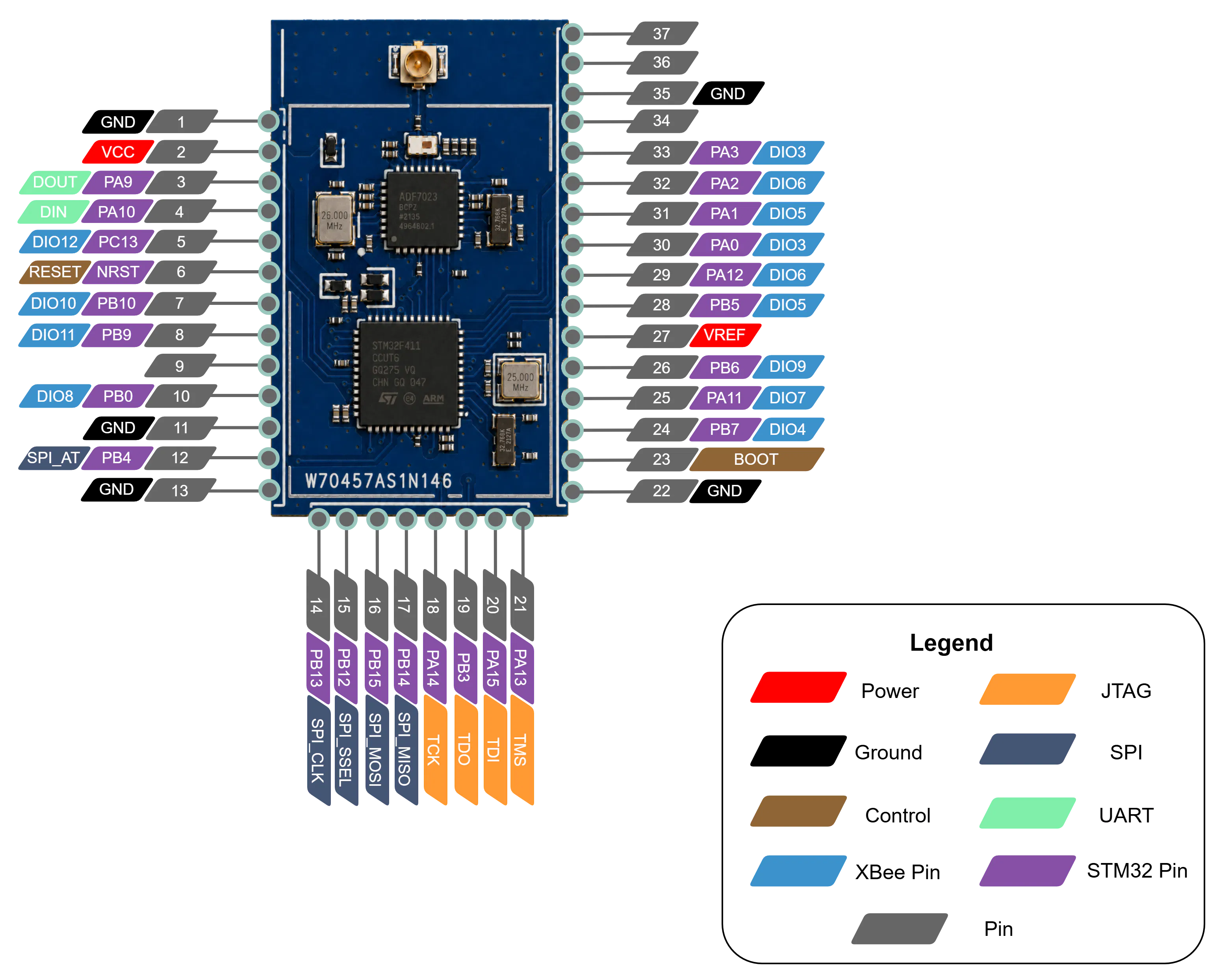
2.FGRFMesh STM32 XBee-Compatible ModuleProcessor: STM32-based embedded radio module.
Purpose: Intended for seamless integration directly into commercial production hardware and PCBs.
Features: Adheres strictly to the standard XBee form-factor. It has been thoroughly validated on standard Digi development hardware, allowing for native UART/API communication workflows.
Firmware, Protocols, and XCTU IntegrationFGRFMesh leverages the high-performance Analog Devices ADF7023 sub-GHz transceiver. Our initial hardware production run focuses heavily on the 868 MHz band, but the entire platform is architected to adapt to 433 MHz and 915 MHz regions with simple matching network adjustments.
Instead of forcing users into clunky, custom desktop software, FGRFMesh natively communicates with Digi’s standard XCTU diagnostic tool. This gives you instant access to institutional-grade testing features out of the box:
Mesh Topology Mapping: Visually inspect your nodes, parent-child links, and route maps.
Throughput Testing: Reliably handles a steady ~20.3 kbps data rate in current configurations.
Range Testing: Live tracking of local and remote RSSI metrics.
To ensure an easy transition for existing hardware architectures, we've implemented a reliable subset of classic XBee API behaviors:
Local & Remote AT command handling
API Mode packet parsing (Transparent TX request / RX response structures)
Dynamic TX Status frame feedback
Node Identifiers (NI) and hardware serial number identification tracking
Real-time last-packet RSSI signal diagnostics
(Note: FGRFMesh is an open community project and is not affiliated with or endorsed by Digi International Inc.


Comments