


I like simple kits. The goal here is not to chase bench specs. It is to build something you can hand to a teammate at 0200, in the rain, and have them start it up without calling anyone. This crate puts a Ranger gateway on a Pulse Pack-style battery with a fused feed, clear connectors, and a laminated quick-start in the lid. It is small, practical, and made to stop the usual stupid problems.
Time & skillTime: 1.5–3 hours.Skill: Low to medium. Basic crimping and wiring, no microcontroller work.
Parts (keep it simple)- Ranger gateway — 1
- Pulse Pack or similar battery, ~500 Wh — 1
- Inline fuse holder + fuse (pick rating for your pack) — 1
- 12 AWG main cable with ring terminals — short run
- Small insulated distribution block or Anderson pigtail — 1
- Rugged keyed DC plug or Anderson to match Ranger — 1
- Small voltmeter or single health LED panel — 1
- Multimeter, cable glands, Velcro, foam, cable ties — assorted
- Laminated 1-page quick-start and small zip bag for spares (fuse, N-adapter, grease)
Estimated parts cost: $300–$800 depending on battery choice.
Safety first:Put the fuse near the battery. Do not short the pack. If you are not comfortable with high current wiring, get help from someone who is.
Build — quick and practical1) Lay it outPick a case with a lid deep enough for a laminated card. Dry fit the Ranger, pack, and spare space. Decide where the fuse will sit and where cables will exit.
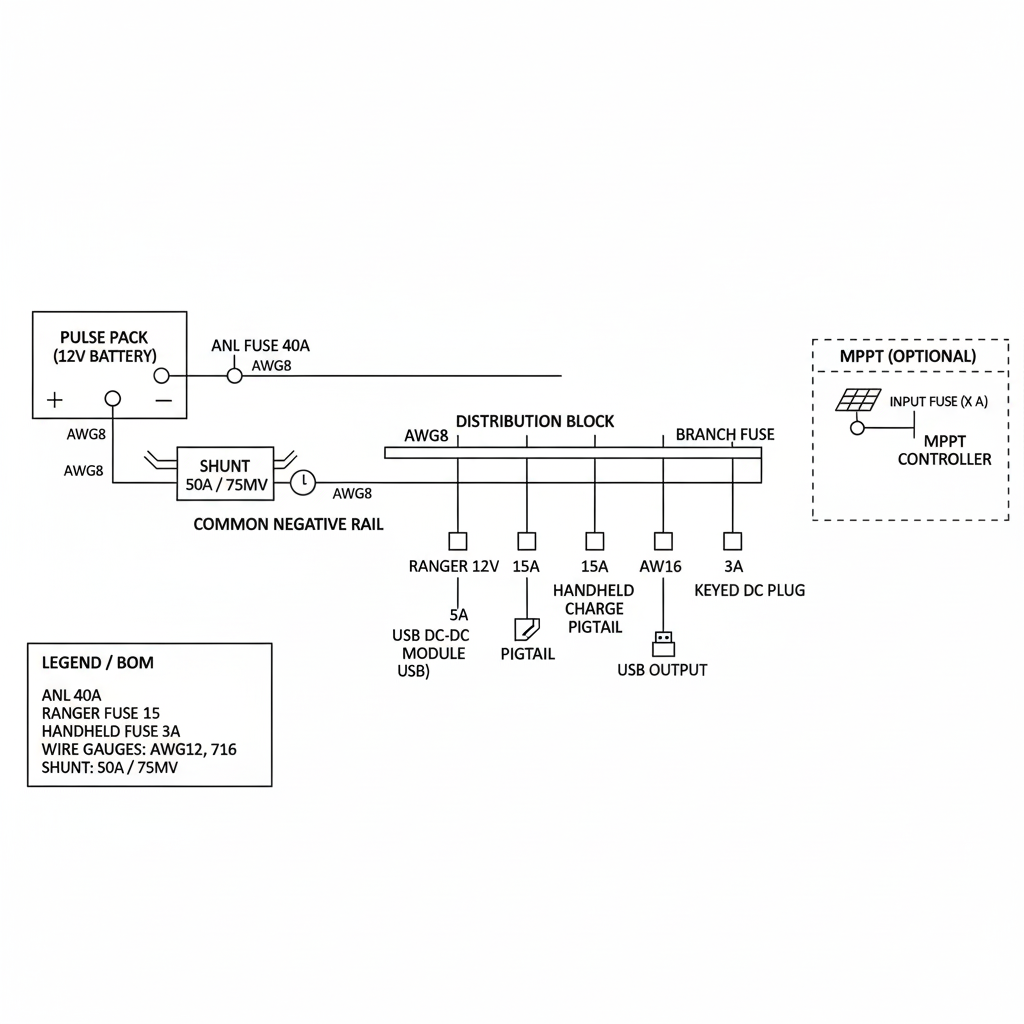
2) Main cable and fuseCrimp ring terminals on the positive and negative. Put the inline fuse on the positive lead as close to the battery as you can. Label the fuse with rating and date. Fuse first. That one move saves frantic drives for replacement parts.
3) Distribution and connectorsMount a small distribution block. Run one keyed output to the Ranger and one spare output for accessories. Use glove-friendly plugs and label everything clearly.
4) Strain relief and routingRoute cables through glands. Add a strain relief loop and secure cables with Velcro. Keep heavy items low and centered so the case is stable.
5) Pack health indicatorAdd a voltmeter or single LED labeled “PACK HEALTH” where an operator can glance and know things are okay. That saves questions in the dark.
6) Quick-start in the lidPrint one page with the pre-deploy checklist, fuse location, basic LED meanings, and the spares list. Laminate it and Velcro it inside the lid.
7) Test and sign offCheck polarity with a multimeter. Power the Ranger for a few minutes and note voltage under load. Wiggle every connector. If anything warms up, stop and recheck crimps.
Pre-deploy quick card (paste this and print)PRE-DEPLOY QUICK START (3 minutes)
- PACK HEALTH — Check voltage and SOC. No go if far below nominal.
- FUSE — Confirm inline fuse present. Spare in lid.
- CABLES — Wiggle and seat every connector until snug.
- MAST & MOUNTS — Confirm mast latch, straps, and magnets are secure.
- MODE — Set node to TRANSIT mode (slow beacons). Flip to SITE mode when deployed.SPARES BAG: fuse, N-adapter, small grease.
Stick card in lid, laminate, and Velcro it down.
Troubleshooting — fast answersNo power? Check fuse first.
- No power? Check fuse first.
- Voltage sags under load? Check crimps and connector seating.
- Pack reports weird SOC? Recalibrate on bench and mark as derated.
Q: Can the Pulse Pack charge other devices?A: The handheld Pulses charge over USB-C. The Pulse Pack battery used here is a dedicated pack. If you need phone charging, add a proper USB regulator or separate power bank.
Q: What fuse rating should I use?A: Match the fuse to the maximum safe continuous current for your wiring and pack. If in doubt, pick a fuse sized slightly above your expected load and consult an experienced tech.
Pulse Pack → Ranger: Field Wiring Schematic

Comments