



Hardware components | ||||||
 |
| × | 1 | |||
 |
| × | 1 | |||
 |
| × | 1 | |||
 |
| × | 1 | |||
 |
| × | 1 | |||
 |
| × | 1 | |||
Software apps and online services | ||||||
 |
| |||||
 |
| |||||
| ||||||
 |
| |||||
 |
| |||||
Hand tools and fabrication machines | ||||||
 |
| |||||
 |
| |||||
 |
| |||||
 |
| |||||
Why I chose a health solution
Health was the natural fit once I thought about what Tamed actually does. It's not managing a task or automating something at home — it's watching conditions while I'm out in them and telling me what to do about my own body before it becomes a problem. Heat, UV, humidity, all the stuff that creeps up on you outdoors without you noticing until you're already behind on it. That's a health problem, not a hobby or a home one.
The category description backs this up too — it's about quality of life during physical activity in the wild, which is exactly the space Tamed lives in.
Why this project fits the category
The alerts Tamed gives are things like "hydrate now" and "reapply sunscreen soon" — decision support aimed at my body, not at a task or a pastime. A hobby solution enhances something I'm doing for fun. A home solution solves a lifestyle problem while I'm sitting still. Tamed's whole job is to keep me okay while I'm moving through the wild, so health is the category that actually describes what it does, instead of me stretching the project to fit somewhere else.
Why I built TamedI spend a lot of time outside — hiking, working with plants, just being out in conditions I don't always think about until they've already gotten to me. Heat creeps up. UV builds without you noticing. By the time you feel it, you're already behind.
I didn't want another app that shows me a number and expects me to do the math myself. I wanted something that watches the wild for me and just tells me what to do about it — before it becomes a problem instead of after.
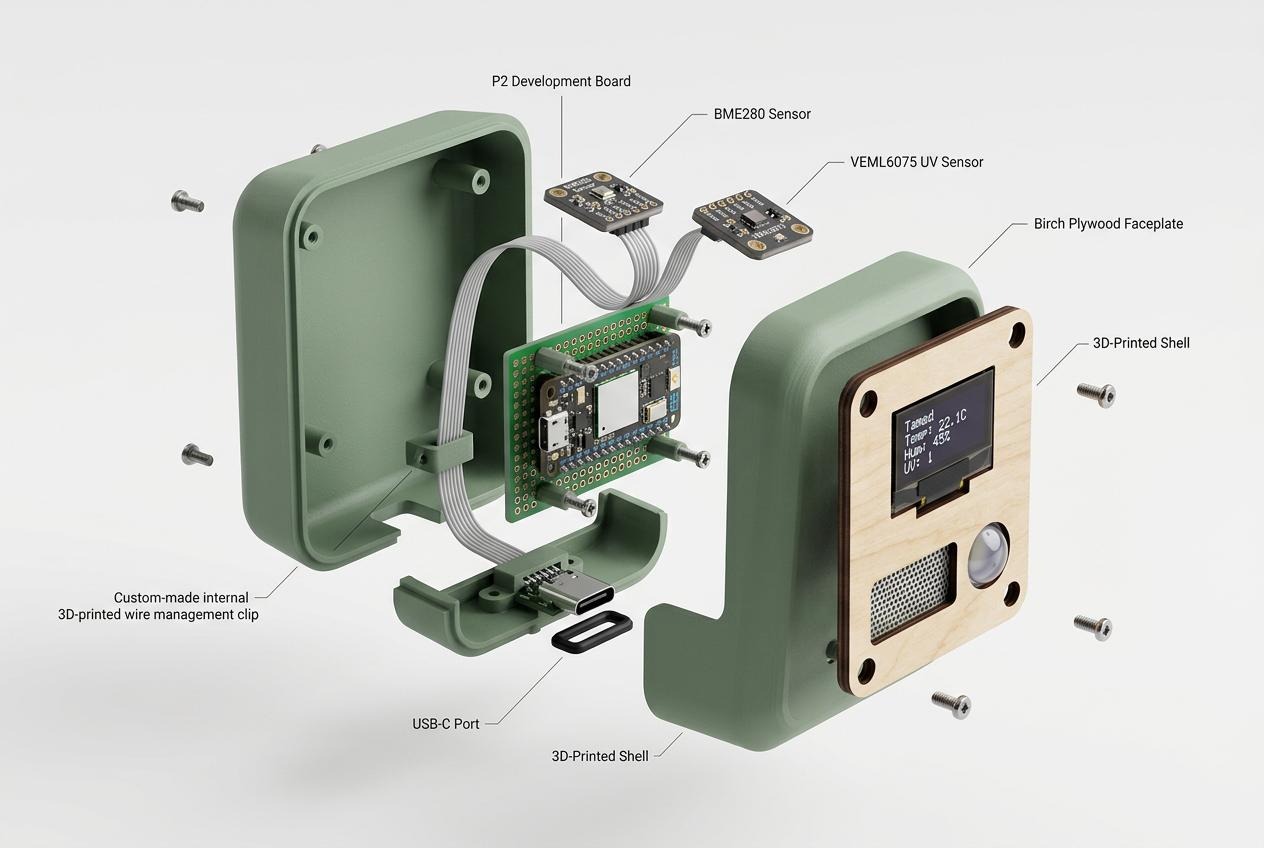
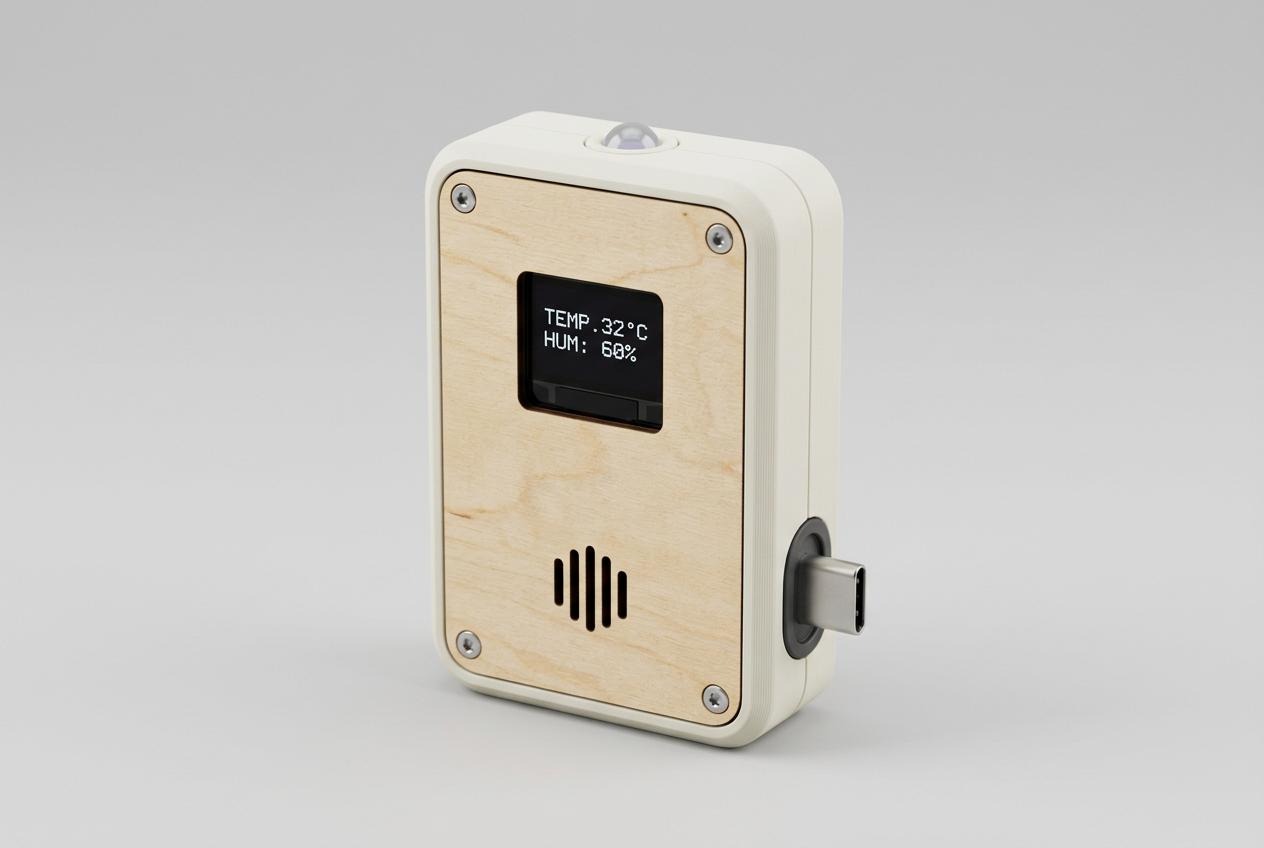
So I built a sensor pod on a Particle P2 that reads the environment in real time, streaming straight into a Java 26 app with zero cloud, zero network dependency — just a wire and some logic, running right there on my machine. Java 26's virtual threads and pattern matching aren't just buzzwords here, they're doing the actual work: reading a live stream of data and turning it into a plain-language heads-up the instant conditions cross a line.
That's the whole idea behind the name. The wild doesn't get less wild — I just get a little more prepared for it. Tamed.
Tamed — build planSo the idea is: P2 reads sensors, talks to my Mac over USB serial, Java 26 does the thinking, JavaFX shows it on screen. No cloud, no LoRaWAN, just a wire and some logic.
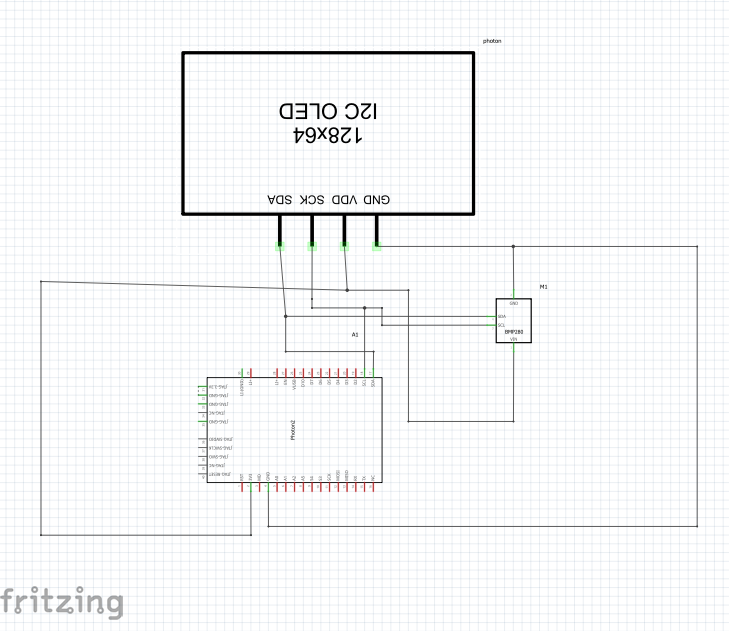
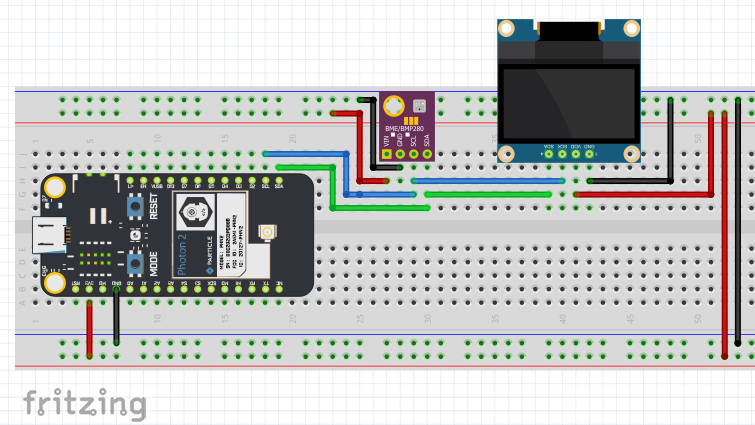
First, bench setup. Wire the BME280 and VEML6075 to the P2 on I2C — SDA/SCL shared bus, different addresses so they don't collide. Power off 3V3, ground shared. If I keep the OLED from the last build, it goes on the same bus too, three devices total. Before writing anything real, flash quick throwaway firmware just to confirm I2C sees both sensors. Skipping this always costs me more time later than it saves now, so do it first.
Firmware. Get the P2 reading temp, humidity, and UV on a loop every second or two, and spit it out over Serial as one line: TEMP:24.3,HUM:41.2,UV:3.1. Mirror it to the OLED if I've got it wired. Test this with a plain serial monitor before Java touches it at all — I want clean lines scrolling by, because that exact format is the contract Java's going to parse against.
Prove the pipe in Java. Set up the Maven project, jSerialComm + JavaFX, Java 26 target. Write just the serial reader first — nothing else — and print raw lines to console. Plug in the P2, watch real numbers show up. That's the whole architecture validated end to end: sensor → firmware → USB → Java. Everything after this is just building on solid ground. Wrap each line into a SensorReading record, and run the listener on a virtual thread so it's not blocking the UI thread later.
The actual brains. This is what makes it more than a fancy serial monitor. Build ConditionScorer — sealed interface or enum for risk level (safe/caution/alert), pattern matching for switch to turn reading ranges into plain-language messages like "UV rising, reapply sunscreen soon" or "humidity dropping fast." Keep a small rolling window of recent readings so I can flag trends, not just static thresholds — trends read way better in a demo.
Dashboard, last. Once data and logic both work, build the JavaFX UI — live labels for each reading, a status banner that changes color based on risk level, maybe a line chart if I have time since it looks polished for basically no extra effort. Bind updates through Platform.runLater() since they're coming off a virtual thread.
Polish. Sync the OLED with the dashboard so there's two visible outputs during the demo. Write a short live demo script — plug in, watch it read, then trigger a threshold on purpose (breathe on the sensor or whatever) so judges see an alert fire live instead of just hearing about it. Drop a README calling out the Java 26 features explicitly — records, pattern matching, virtual threads — since that's what judges are scanning for.
If there's time left over: add the pulse sensor for a health angle, or get BLE working as a fallback. If I'm behind, that's the first stuff to cut — the core pipeline is the actual entry


Comments