



Hardware components | ||||||
 |
| × | 1 | |||
 |
| × | 1 | |||
 |
| × | 1 | |||
 |
| × | 1 | |||
| × | 1 | ||||
 |
| × | 1 | |||
 |
| × | 1 | |||
| × | 1 | ||||
| × | 1 | ||||
 |
| × | 1 | |||
 |
| × | 3 | |||
| × | 1 | ||||
| × | 2 | ||||
 |
| × | 1 | |||
 |
| × | 1 | |||
| × | 1 | ||||
 |
| × | 1 | |||
Software apps and online services | ||||||
 |
| |||||
 |
| |||||
 |
| |||||
| ||||||
Hand tools and fabrication machines | ||||||
 |
| |||||
 |
| |||||
 |
| |||||
 |
| |||||
 |
| |||||
 |
| |||||
IABEILLES is an IoT solution developed at Polytech Sorbonne to protect bee colonies from Asian hornet predation. The system uses artificial intelligence for visual and acoustic detection, while transmitting environmental data through the LoRaWAN network.
To address the growing threat of Asian hornets, we developed the IABEILLES project: a connected system designed to automatically monitor a beehive.
It collects useful information in real time using various sensors, then analyzes this data to help better understand the state of the colony.
The goal is not only to measure, but also to transform these measurements into information that is easy to use. The data can then be accessed through the Beep API, allowing users to monitor hive activity, detect certain anomalies more quickly, and support decision-making.
In practical terms, this system enables a beekeeper or researcher to install a monitoring solution on a hive and gain a clearer view of how it functions, without requiring constant intervention. IABEILLES combines the Internet of Things (IoT) and beekeeping to offer a modern monitoring tool that is easy to deploy and useful in everyday practice.
Mission and ObjectiveThe mission of IABEILLES is to provide a reliable and intelligent solution for real-time monitoring of hornet activity around beehives. Faced with the predation pressure threatening bee colonies, this system becomes a valuable tool for both beekeepers and researchers.
By combining artificial intelligence with sensors adapted to outdoor conditions, it makes it possible to monitor activity in front of the hive more accurately, while taking environmental constraints into account.
The objective is not only to detect the presence of hornets, but also to provide a clearer understanding of the pressure being exerted on the hives, in order to better protect the bees.
For detailed instructions on how to install the system yourself, please refer to the UserGuide.pdf provided in the GitHub repository.
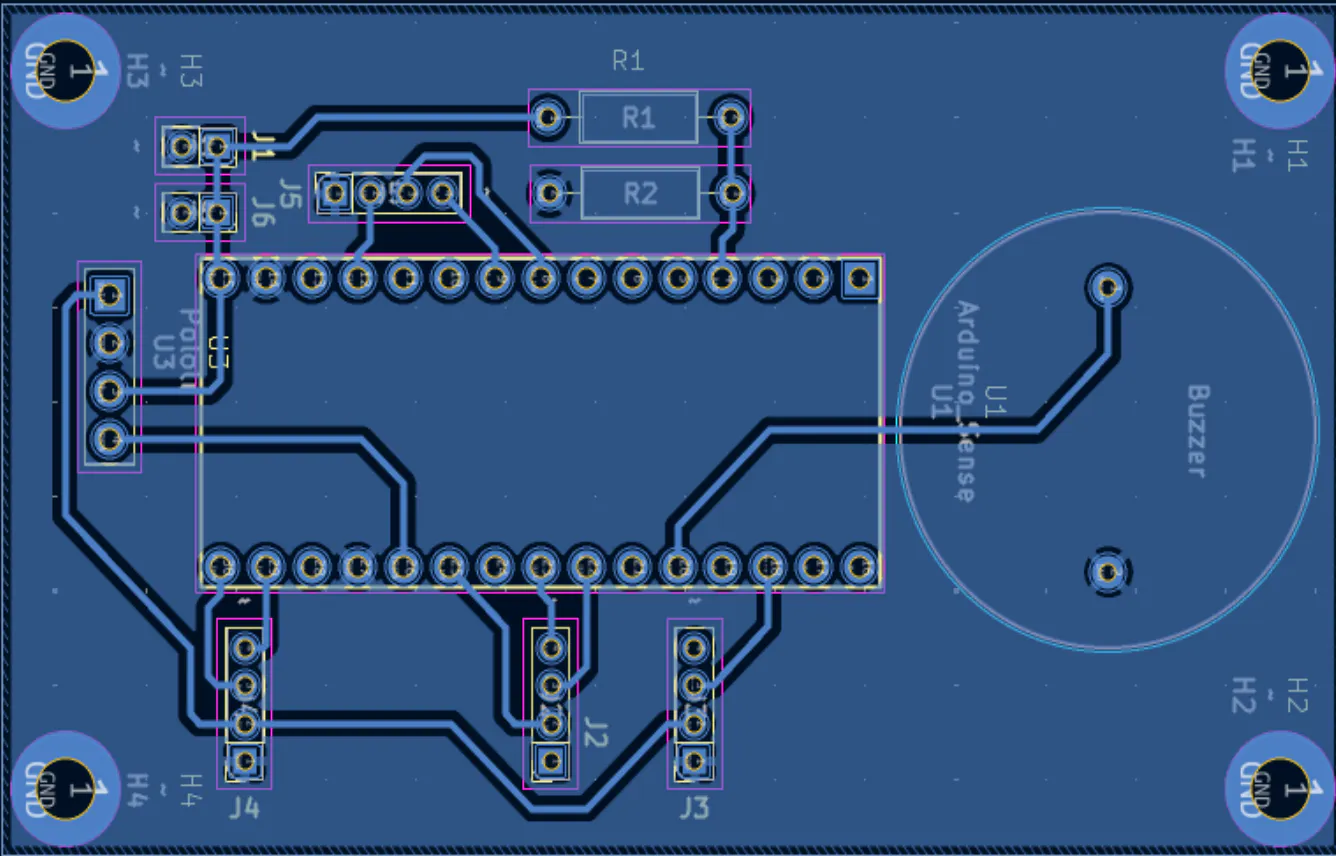
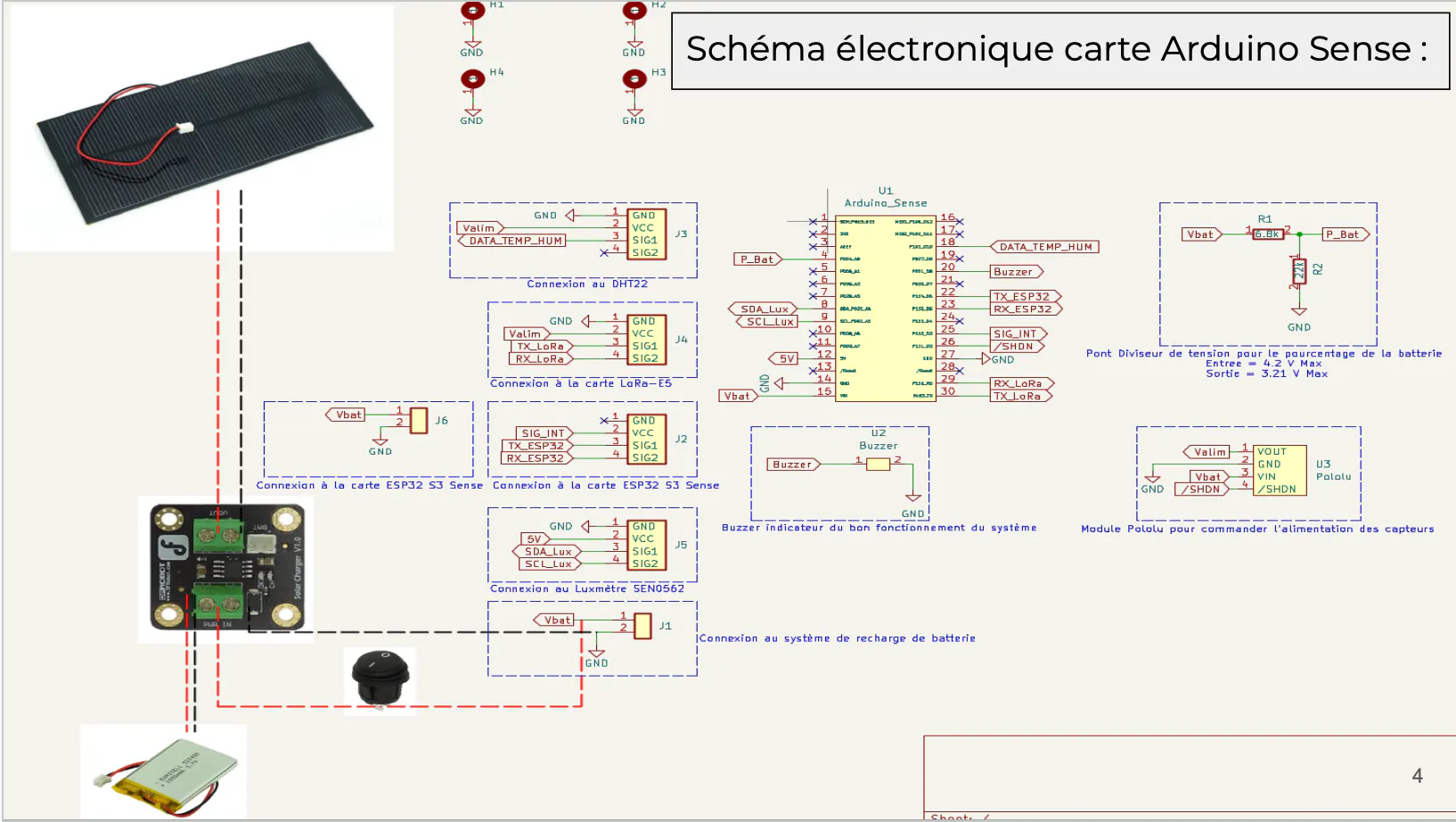
The IABEILLES system is built around three microcontrollers, each responsible for a specific part of the project.
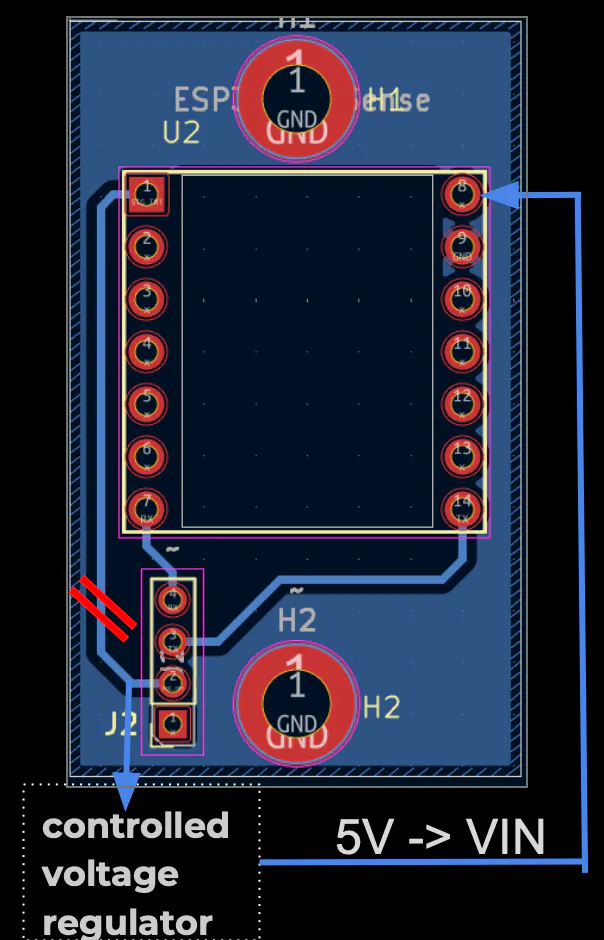
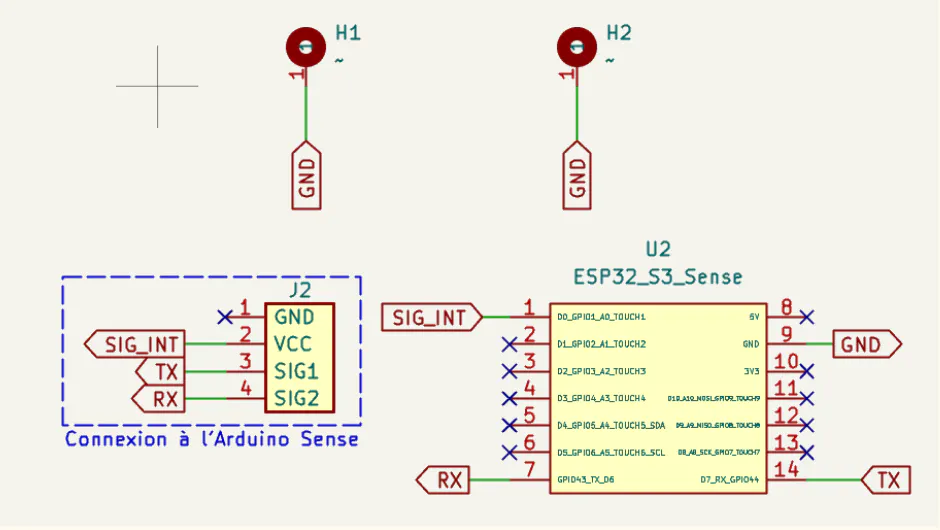
The first one is a powerful Seeed Studio XIAO ESP32S3 Sense, equipped with a camera module and used for visual recognition. The second one is an Arduino Nano 33 BLE Sense, which handles audio analysis as well as sensor management. Finally, a Seeed Studio LoRaWAN module is used for long-range communication.
The audio detection approach was inspired by several scientific articles:
- Remote and automated detection of Asian hornets (Vespa velutina nigrithorax) at an apiary, using spectral features of their hovering flight sounds
- Giant hornet (Vespa soror) attacks trigger frenetic antipredator signalling in honeybee (Apis cerana) colonies
- Queen Detection in Beehives via Environmental Sensor Fusion for Low-Power Edge Computing
The datasets used for the project were mainly obtained from the supplementary materials provided with these articles.
Model DesignThe first article was used as a reference to structure the neural network dedicated to hornet detection. The approach is based on the periodic hovering behavior of Asian hornets in front of the hive.
Due to memory and space constraints, the periodicity aspect was not included in the final implementation. Instead, we focused on detecting wingbeat frequency patterns.
A 2D convolutional neural network was used, combined with MFE preprocessing. This preprocessing method provides more detail in the lower frequency range, with a focus between 50 Hz and 8000 Hz.
Ideally, a 2D Fourier Transform could have been used to better analyze the frequency and time components of the signal.
MFE ParametersThe MFE preprocessing parameters were configured as follows:
Parameter Value
Filter number 40
FFT length 128
Frame length 0.001 s
Frame stride 0.005 s
The frame stride was chosen to preserve temporal coherence in the audio signal.
ClassifierThe classifier includes noise, time, and frequency band augmentation.
The neural network uses a dense layer with 20 neurons and a dropout rate of 0.1.
Queen Detection ReferenceThe third article, focused on queen detection, highlights the need for recording durations longer than 2 seconds. It also suggests that a 1D neural network could be used for this type of audio classification.
This article also encouraged us to consider using MFCC preprocessing as an alternative feature extraction method.
Integration ConstraintsThis raised an integration issue on the Arduino. Implementing two separate models requires combining them using Edge Impulse’s generated code. However, this is only possible if both models share the same parameters, through a multi-impulse setup.
Another challenge is related to the placement of the enclosure containing the Arduino. The dataset used for training was recorded with a microphone placed above the hive entrance, without any enclosure. In our case, the microphone is integrated inside a waterproof box.
Because of this, it would be necessary to perform an acoustic characterization of the enclosure and modify the training dataset accordingly.
Memory LimitationsAnother important limitation is the low amount of RAM available on the Arduino Nano 33 BLE Sense, which is around 126 kB.
A model processing more than 2 to 3 seconds of audio at 16 kHz / 16-bit would be difficult to fit on the board. Migrating the audio model to the second board could therefore be an interesting improvement, while also reducing the total cost of the system.
Current ImplementationThe model currently deployed focuses only on hornet detection and uses 1-second audio samples.
After model quantization, deployment on the board, and integration inside the waterproof enclosure, the model still performs correctly on the test data.
For future work, it could be interesting to change the detection paradigm. Instead of trying to identify the sound of a hornet within a noisy outdoor environment, the system could focus on listening to the hive itself and detecting changes in bee behavior caused by the presence of a threat.
Detection ClassesBoth AI models were trained using Edge Impulse, with datasets provided by the university.
For audio detection, we used two classes: Bee and Hornet.
For video detection, we used three classes: Bee, Bees, and Hornet.
As expected, the Bee and Hornet classes refer to individual bees and hornets. The Bees class represents a cluster of bees. This is a meaningful metric because European honeybees tend to gather together when they feel threatened.
Detecting this behavior can help beekeepers identify a potential threat in front of the hive, even when a hornet is not directly detected.
Battery lifeOne of the main goals of the project was to design a fully autonomous system. To achieve this, we carried out several power consumption analyses in order to evaluate the viability of the solution in real-world conditions.
As shown , visual detection has a significant energy impact. For this reason, we had to find a workaround to reduce power usage. You will see later in the article, the final solution proved to be highly power-efficient.
Data ProcessingFor data transmission and management, the system uses the LoRaWAN protocol in combination with The Things Network.
The collected data is then sent to the Beep API, where it can be displayed and analyzed through graphical visualizations.
Alert systemPipedream was used to implement the alert system. It acts as an automation platform that connects APIs and services together, allowing the system to automatically trigger notifications when a certain level of threat is detected.
DeploymentOnce the complete system had been validated in the classroom, we deployed it on real beehives for field testing, as shown in the pictures.
As shown in the picture, the system has been running continuously since mid-April.
As a future improvement, the system could be simplified by removing the Arduino board and relying only on the XIAO ESP32S3 Sense, since it also includes an integrated microphone. This would reduce the overall cost and power consumption of the system, while also making the design more compact.


Comments