


Hardware components | ||||||
 |
| × | 1 | |||
 |
| × | 1 | |||
Software apps and online services | ||||||
 |
| |||||
Hand tools and fabrication machines | ||||||
| ||||||
 |
| |||||
 |
| |||||
As heavy voice input users, our team relies heavily on speech-to-text in daily workflows. But we've found that existing solutions consistently fall short in real-world settings like offices and meeting rooms—built-in laptop mics sit 50–100cm from your mouth, picking up colleagues' chatter and AC hum alike, leaving us with transcripts that need extensive manual cleanup. We realized the issue isn't the recognition engine itself; it's the physics of distance dictating signal-to-noise ratio. The mic is just too far away. That led us to the idea of using a lapel-mounted device to bring the microphone within 20–30cm of the mouth, then pairing it with cloud AI to build a voice input system that truly hears clearly and transcribes accurately.
You can download software and firmware easily on VoiceStickPlus.
Crosstalk in noisy environments. Built-in mics at 50–100cm pick up other people's voices. Accuracy in busy settings drops to roughly 60%.
- Crosstalk in noisy environments. Built-in mics at 50–100cm pick up other people's voices. Accuracy in busy settings drops to roughly 60%.
Afraid to speak up, can't whisper either. In libraries or meetings, speaking louder disturbs others; whispering falls below the detection threshold. A no-win situation.
- Afraid to speak up, can't whisper either. In libraries or meetings, speaking louder disturbs others; whispering falls below the detection threshold. A no-win situation.
Software alone can't fix the root cause. The farther the mic, the weaker the signal—that's physics. Pure software noise reduction can't overcome distance.
- Software alone can't fix the root cause. The farther the mic, the weaker the signal—that's physics. Pure software noise reduction can't overcome distance.
On top of that, existing Bluetooth devices lack integrated cloud AI. Off-the-shelf Bluetooth headsets and lapel mics are just audio capture devices with no recognition engine built in. Meanwhile, pure software options (WeChat voice input, Apple Dictation) still rely on distant built-in mics. And when speech comes in fits and starts, the output is riddled with gaps and stray spaces, forcing users to manually clean up sentence by sentence. These aren't edge cases—they're everyday frustrations.
Our core thesis: inaccurate voice input stems from physical distance, not the recognition engine. Instead of chasing incremental software-side noise reduction, we tackle the SNR problem at the hardware level. The market lacks a purpose-built personal voice input device that unifies near-field hardware + intelligent software + recognition engine—and that gap is exactly where we come in.
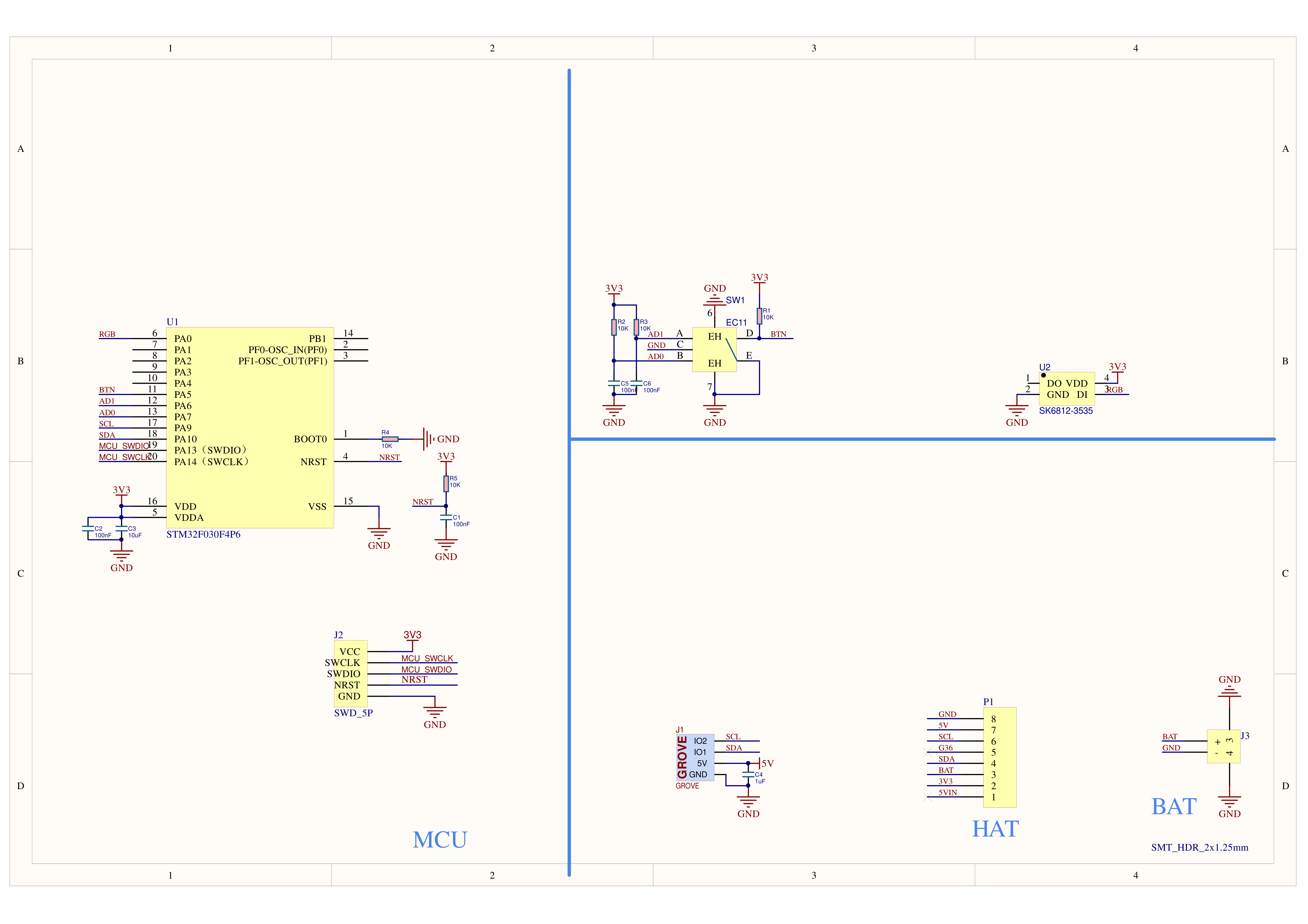
In terms of trade-offs, we chose full vertical integration: designing our own ESP32-S3 wearable endpoint, developing a proprietary pseudo-streaming text stabilization algorithm, and owning the entire pipeline from audio capture to text injection. It's a harder path, no question. But only vertical integration lets us deeply optimize every link in the chain, closing the loop on clear hearing, accurate recognition, and fast output. The architecture also reserves multimodal expansion interfaces (voiceprint recognition, lip-reading), leaving room to explore what comes next.
Special thanks to Xiaoxia for open-sourcing the VoiceStick project, which provides an excellent voice recognition open-source project based on the M5Stack StickS3 device, with Windows and Mac clients. It has offered us outstanding technical reference for our project development, and we are also honored to continue contributing to the open-source community.
Also special thanks to glugchik for sharing the M5Stack StickS3 case, which provides a very stylish, sturdy, and durable protective shell design, offering an excellent foundation for our further development. We are also honored to share our improved case design with a lapel clip.


Comments