


Powering devices reliably is a common challenge in embedded systems, wearables, and IoT products—especially when frequent plugging and unplugging can cause connector wear or alignment issues. To solve this, magnetic pogo pin charging interfaces provide a robust, user-friendly alternative.
In this article, I’ll introduce a USB-to-magnetic pogo pin charging cable, explain how it works, and explore practical use cases for makers and product designers.
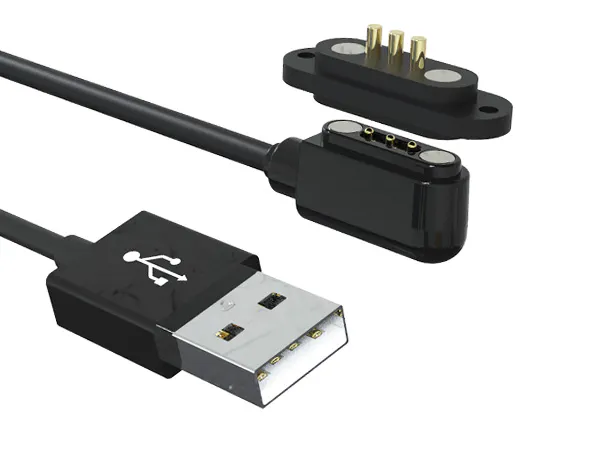
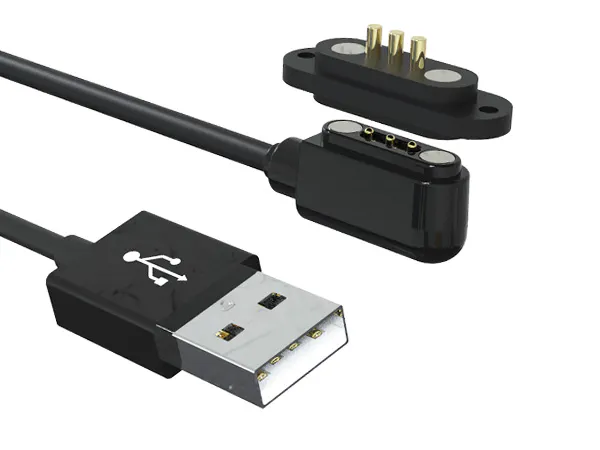
What Is a Magnetic Pogo Pin Charger?A magnetic pogo pin charger combines spring-loaded pogo pins with magnetic alignment, allowing power to be transferred without traditional mechanical connectors.
Key components:
USB-A power input
- USB-A power input
Spring-loaded pogo pins for stable electrical contact
- Spring-loaded pogo pins for stable electrical contact
Magnetic docking for automatic alignment
- Magnetic docking for automatic alignment
Detachable mating pad mounted on the device
- Detachable mating pad mounted on the device
Once the cable is brought near the device, the magnets guide the pins into position, ensuring consistent contact without user effort.
Why Use a Pogo Pin Charging Solution?Compared to Micro-USB or USB-C connectors, pogo pin chargers offer several advantages:
🔧 DurabilityNo exposed female connector
- No exposed female connector
Reduced mechanical wear over time
- Reduced mechanical wear over time
Ideal for devices with frequent charging cycles
- Ideal for devices with frequent charging cycles
Enables sealed or waterproof enclosures
- Enables sealed or waterproof enclosures
Great for outdoor, medical, and industrial devices
- Great for outdoor, medical, and industrial devices
Magnetic snap-on connection
- Magnetic snap-on connection
No need to align plugs manually
- No need to align plugs manually
Perfect for one-handed operation
- Perfect for one-handed operation
This type of charging cable is commonly used in:
Wearable devices (smart bands, health monitors)
- Wearable devices (smart bands, health monitors)
IoT sensors and data loggers
- IoT sensors and data loggers
Handheld test equipment
- Handheld test equipment
Charging cradles and docking stations
- Charging cradles and docking stations
Prototype and development boards
- Prototype and development boards
For makers, it’s especially useful when building enclosures where traditional USB ports are hard to access.
Electrical ConsiderationsWhen integrating a pogo pin charging interface into your project, keep in mind:
Pin configuration (e.g., VBUS, GND, optional data pins)
- Pin configuration (e.g., VBUS, GND, optional data pins)
Current rating of pogo pins
- Current rating of pogo pins
Contact resistance and plating material
- Contact resistance and plating material
Cable strain relief for long-term reliability
- Cable strain relief for long-term reliability
Most USB-powered pogo pin cables are designed for 5V input, making them compatible with standard USB power sources and development boards.
ConclusionMagnetic pogo pin USB charging cables are a simple yet powerful solution for modern hardware projects. They improve durability, simplify user interaction, and enable cleaner industrial designs—especially in compact or sealed devices.
Whether you’re prototyping a new IoT product or refining a wearable design, this charging method is well worth considering.
USB-to-magnetic pogo pin charging cable
A USB-powered magnetic pogo pin charging cable that uses spring-loaded pins and magnetic alignment to deliver reliable power without a traditional plug-in connector. It’s ideal for wearables, IoT devices, and sealed or frequently charged products.
How to use
Connect the USB end to a power source, mount the mating pogo pin pad on your device, and bring the cable close—the magnets automatically align the pins and start charging.
Chloe Hor
 QH Industrial - Chloe Hor

Comments